Utility Locating for Pipelines and Gas Distribution: More Than Just Finding the Line
- Materials Lab Inc
- No Comments
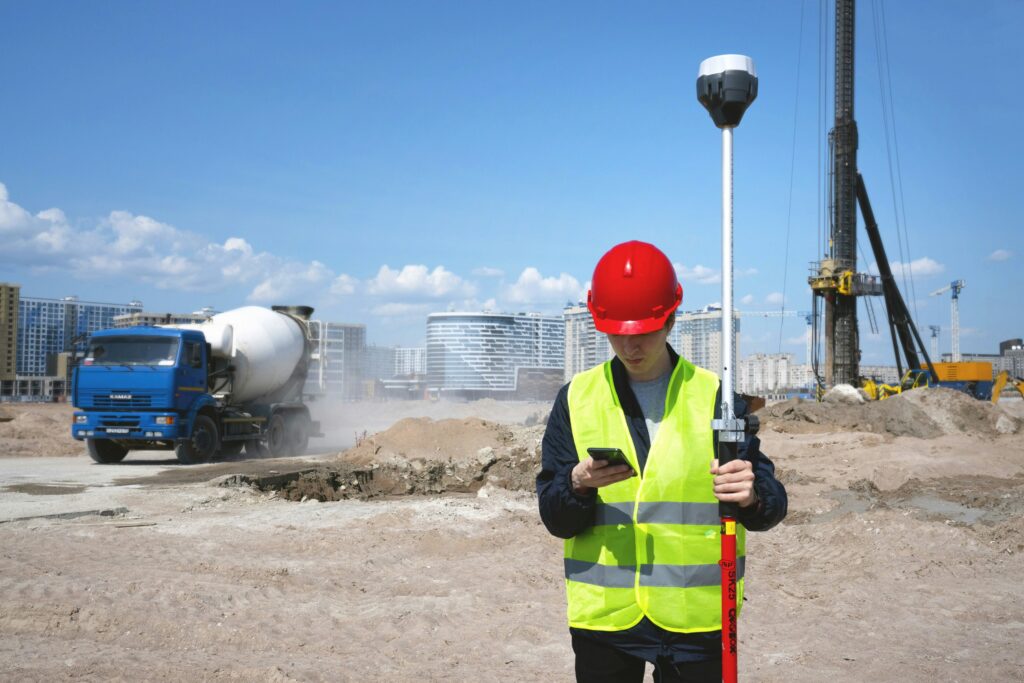
In the oil and gas and gas distribution sectors, utility locating goes well beyond simply confirming where a pipe is buried. Pipeline locating is a specialized discipline that integrates route tracing, depth measurement, and — increasingly — coating condition assessment into a single field program.
Tracing Pipeline Routes
Gas distribution mains and transmission pipelines are typically metallic (steel), making them excellent candidates for electromagnetic locating. A transmitter signal applied to the line travels along the pipe, and the receiver traces the route above ground. For long pipeline runs, direct connection at a test station or cathodic protection rectifier gives the best signal travel distance.
One of the key challenges in pipeline locating is signal loss — the signal applied to the pipe diminishes as it travels, particularly where the pipe coating is in poor condition or where the cathodic protection system is consuming the signal. Understanding signal behaviour along the pipeline helps experienced locators distinguish a genuine line end from signal attenuation.
Depth and Cover Verification
Minimum cover requirements for buried pipelines are specified by regulation (in Canada, CSA Z662 for oil and gas pipelines). Verifying that adequate cover is maintained — particularly after ground disturbance events like flooding, erosion, or surface regrading — is a routine inspection requirement.
Modern locators with calibrated depth estimation can provide cover measurements at regular intervals along a pipeline route. This data, combined with GPS, can be incorporated into a GIS record of pipeline depth across a corridor.
Locating Plastic Pipe
Untraced plastic pipe presents a significant challenge since it carries no electrical signal. The primary solution is the sonde — a battery-powered transmitter small enough to be inserted into the pipe from a fitting or valve. As it travels through the pipe (either pushed, pulled, or carried by flow), the sonde broadcasts a signal from inside, which the receiver can detect above ground to trace the route.
For plastic gas mains, tracer wires are often installed alongside the pipe during construction precisely to allow future locating. Verifying the continuity and connectability of these tracer wires is an important part of any pipeline integrity program.
Coating Surveys Using Current Measurement
An advanced technique available to pipeline operators is the use of locating current measurement to infer coating condition. When a signal is applied to a pipeline, the rate at which the signal current decreases along the pipe is related to how much current is being lost to ground — which is in turn related to how many holidays (defects) are in the coating. A pipeline with good coating retains signal current over long distances; a pipeline with coating degradation shows rapid current attenuation.
This technique, combined with direct current voltage gradient (DCVG) surveys and close-interval potential surveys (CIPS), forms part of a comprehensive pipeline integrity assessment.
Materials Lab Pipeline Locating Services
Materials Lab brings both locating capability and corrosion engineering expertise to pipeline locate programs. Our team understands not just where the pipe is — but what the locate data can tell you about its condition. Contact us at materialslab.ca to discuss your pipeline integrity or locating requirements.
Contact us at materialslab.ca to discuss your upcoming project.
📧 info@materialslab.ca
📞 587-594-5521